



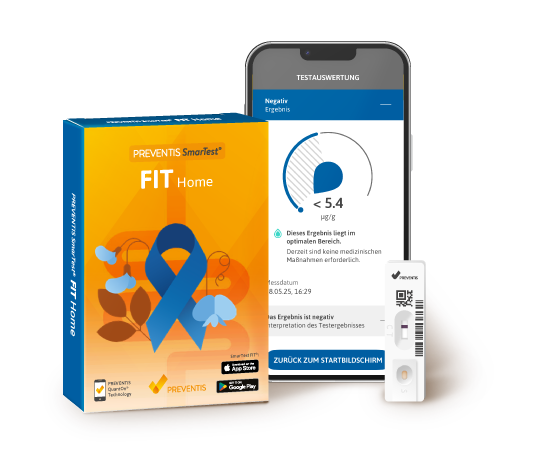



SmarTest Calprotectin Home
Iron deficiency and hemochromatosis test to measure ferritin at home
- u003cstrongu003eAt-home selftest u003c/strongu003eallowing you to measures your iron storage comfortably at home.
- u003cstrongu003eSmartphone-based analysisu003c/strongu003e provides a u003cstrongu003equantitative resultu003c/strongu003e comparable to the lab—without sending in a sample.u003cbru003e
- u003cstrongu003eIron is essential for health,u003c/strongu003e yet deficiency and overload often remain unnoticed. Testing supports early detection and timely action.
 Blood sample
 No medical training needed
 Made in Germany
 Results in 15 minutes
Is your smartphone supported by our app?
Iron Deficiency & Anemia
The Importance of Iron
Globally, iron-related disorders affect billions of people, and anemia alone impacts nealry one in four individuals worldwide [16]. Your body needs oxygen to work properly — and iron plays a key role in making this possible. Most of the iron in your body is part of haemoglobin, the substance in red blood cells that carries oxygen from your lungs to the rest of your body. If there is not enough iron, your body cannot produce enough haemoglobin, and less oxygen reaches your cells. This can affect how much energy you have, how well you can concentrate, how your muscles perform, and how quickly your body renews it cells [3]. Because the body cannot produce iron on its own, it must be absorbed through food. Insufficient intake or impaired absorption can gradually reduce iron levels, often without noticeable symptoms. Low iron levels can for example reduce physical and mental performance. Typical early signs such as fatigue or reduced stamina often develop slowly. Though vital for health and well being, iron deficiency ramins the most common nutrient deficiency worldwide, affecting billions of people [16]. Low iron levels can reduce physical and mental performance, impair thermoregulation and weaken the immune system.
Ferritin reflects the body’s iron stores more reliably than serum iron. Blood iron levels fluctuate throughout the day and can be influenced by diet, supplementation and inflammation. Measuring iron directly therefore does not reliably indicate a deficiency or overload.
Ferritin acts as the body’s iron store. It is mainly stored in the liver, spleen and muscles and can supply iron when intake is insufficient. Ferritin levels may change before other iron-related markers are affected, making them useful for identifying low iron stores or iron overload (haemochromatosis) at an early stage.
Ferritin is a stable and clinically relevant marker in iron diagnostics. Measuring ferritin supports informed health decisions and preventive action, ideally in consultation with a healthcare professional.
Read more
Iron deficiency anemia usually develops gradually as the body’s iron stores become depleted over a prolonged period. In the early stages, ferritin levels decrease. Once iron stores are exhausted, hemoglobin and red blood cell production decrease, reducing the blood’s ability to transport oxygen. This is when iron deficiency has developed into anemia – a condition where oxygen supply to your cells becomes impaired. Iron deficiency anemia can have serious consequences.
Common symptoms of iron deficiency may include fatigue and exhaustion, dizziness and headaches, reduced concentration, cold hands and feet, hair loss and brittle nails. Iron deficiency can remain unnoticed for a long time. Regular monitoring is therefore particularly relevant for people with an increased risk, including:
- Women
- Pregnant and breastfeeding individuals
- People with hair loss
- Vegetarian or vegan diets
- Athletes
Iron overload occurs when your body stores too much iron, which will be reflected in your blood. Ferritin normally binds excess iron and protects cells, but when iron accumulates beyond storage capacity, the surplus may deposits in organs such as the liver, heart and pancreas. Besides oxidative stress and cellular damage, this can lead to liver disease, heart problems or diabetes if untreated.
Hereditary haemochromatosis is a common cause of iron overload, a genetic condition in which the body absorbs more iron than it actually needs. In northern European populations and countries of descendants, hereditary haemochromatosis is one of the most common inherited disorders.
Ferritin testing can support the assessment of suspected haemochromatosis. Iron overload may remain unnoticed for long periods, as it often develops slowly. Symptoms of haemochromatosis may include:
- Feeling unusually tired
- Joint pain
- Heart palpitations or irregular heartbeat
- Bronze or gray skin colour
- Dark, black or bloody stool
- Reduced libido or loss of sex drive
- Weight loss
- Upper abdominal pain
Read more
How does the test work?

The Rapid Test with the App
SmarTest Ferritin Home is simple and intuitive. The app guides you step by step through the entire process through short videos and clear instructions. You only need a small blood sample – no prior medical knowledge required. After scanning the test, your numerical result is displayed in the app. You can save it,compare it with previous results, or access it via the mySmarTest Portal in the web browser.

1. Check your smartphone & open the app
Before starting, make sure your smartphone is supported by the SmarTest app by clicking here. Then open the SmarTest Calprotectin app. The app guides you through the entire test preparation.

2. Take a small blood sample
Collect a small blood sample from your fingertip and apply it to the application window of the test cassette.
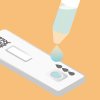
3. Add solution & run the test
After 30 seconds, add one drop of the buffer solution to the application window. Then allow the test to react.
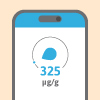
4. Scan the test and view your result
After 15 minutes, scan the cassette with your smartphone camera in the app to view your Ferritin value (ng/mL).
Why choose SmarTest Calprotectin Home?

Clear Numerical Results
Instead of interpreting color lines or estimating, receive a quantitative value in ng/ml instantly in the app.

No Lab Send-in. No waiting.
Get results in 15 minutes. Perform the test at home without sample shipment or waiting for days.

Track Ferritin Levels Over Time
Results are stored in the app—especially useful during supplementation, dietary changes or risk groups.

Results comparable to the lab
The app turns your smartphone camera into a lab reader and analyse the test strip’s colour intensity.

mySmarTest Portal
The mySmarTest Portal is your personal space to view, track, and understand results from all your SmarTest products in one place. By creating a mySmarTest account, your test results are available not only in the app but also in your web browser with clear visual graphs and the option to share result with a healthcare professional. MySmarTest is free of charge and included with every SmarTest. Creating an account is completely optional.
Proof of Authority





FAQs
Yes. Preventis offers a growing range of smartphone-based rapid tests that allow you to measure different health biomarkers conveniently at home.
All SmarTest products follow the same principle: a rapid test kit combined with a smartphone app that guides you through testing and delivers quantitative results in the app. Depending on the test, this enables you to monitor different aspects of your health, such as nutrient status or specific disease-related markers.
You can find an overview of all available SmarTest products — and check which biomarkers you can currently test for — directly in the Preventis online shop. There, you can choose the test that best fits your needs and easily order it for home use.
Go to Shop
Because iron cannot be produced by the body, it must be absorbed through food. An iron-rich diet is therefore essential for preventing iron deficiency. Iron from animal sources is generally absorbed more efficiently than iron from plant-based sources.
- Common dietary sources of iron include:
- Bread and wholegrain products
- Meat and processed meat
- Fish and seafood
- Spinach and beetroot
- Legumes such as kidney beans, chickpeas, and edamame
- Nuts and dried fruit
- Sesame
In severe cases supplementation can also be the solution, in consultation with a healthcare professional.
Most commercially available self-tests marketed as “iron”, “iron deficiency”, or “anaemia” tests also measure ferritin levels in the blood. Ferritin testing provides insight into iron stores and allows iron imbalance to be detected at an early stage. Ferritin is the most important and commonly used marker in iron diagnostics.
In suspected hemochromatosis, ferritin levels are typically considered elevated at more than 300 μg/L in men and more than 200 μg/L in women. On their own, these values are not enough for diagnosis and are usually interpreted together with transferrin saturation [17].
SmarTest Ferritin Home and Pro provide you with quantitative results that are comparable to laboratory measurements.
During product development, SmarTest Ferritin was evaluated against established laboratory ferritin assays from leading diagnostic manufacturers such as Roche Diagnostics and others. In a comparison involving more than 100 patient samples, SmarTest Ferritin showed an agreement of over 90% with the reference laboratory method.
It is important to understand that ferritin results can vary even between different laboratory tests, depending on the analytical method and manufacturer used. This means that slight differences between results are normal — not only between home tests and labs, but also between different laboratories themselves.
For this reason, when monitoring the iron storage over time, healthcare professionals recommend using the same test method consistently. SmarTest Ferritin is therefore well suited for regular monitoring of ferritin in blood, as it allows you to track changes using the same test method over time.
In summary, SmarTest Ferritin offers reliable, lab-comparable results and supports informed decisions about your iron status — ideally in consultation with a healthcare professional.
Yes. SmarTest Ferritin Home is a self-test that is performed entirely at home — from collecting a small blood sample from the finger prick to result evaluation using your own smartphone camera.
SmarTest Ferritin Pro is the professional version of the same test and is designed for healthcare professionals. The two versions differ mainly in packaging size and additional app features for professional users, such as setting multiple timers to run several tests simultaneously at the point of care.
Go to SmarTest Ferritin Pro
Normal iron levels when testing for serum ferritin differ with regards to sex. For women, normal ferritin levels are within the range of 15- 205 ng/ml. For men normal ferritin levels are within the range of 30-566 ng/ml [16].
SmarTest Ferritin Home measures ferritin levels in capillary blood. Ferritin is the protein that stores iron in your body and reflects how well your iron reserves are filled. Because ferritin is a stable and reliable marker, it is the most widely used parameter for assessing iron status and overall iron balance. For this reason, ferritin testing is often referred to as an iron deficiency test.
If you are not using a mySmarTest account, your test results are stored locally on your smartphone. This means that if you change or replace your device, your results will no longer be available.
If you have a mySmarTest account, your results are securely stored and linked to your account. You can access them again at any time by logging in on your new smartphone or through the web browser view.
Creating an account ensures that your results are saved securely and remain accessible even if you change devices.
In principle, iron deficiency can affect people of all ages and genders. However, certain groups are at higher risk and should pay particular attention to their iron status. Regular monitoring of ferritin is recommended, especially for:
- Pregnant and breastfeeding individuals
- Infants and young children
- Children and adolescents during growth phases
- People following vegetarian or vegan diets
- Endurance and competitive athletes
- Individuals with heavy menstrual bleeding and who reagularly donate blood
- People undergoing implant surgery at the dentists
- Individuals with gastrointestinal conditions (e.g. coeliac- or Crohn’s disease)
- People with chronic illnesses or after gastrointestinal surgery
- Individuals with known iron storage disorders or liver disease
Each rapid test contains a test strip with antibodies and a buffer solution. Similar to food or medication, these components are not stable indefinitely. Over time, evaporation and environmental influences can reduce their effectiveness. The expiration date is therefore a technical limit that ensures the test can still deliver reliable results. Once a test has expired, the SmarTest app automatically detects this and blocks the evaluation. This is an important quality and safety measure to ensure that only valid and reliable results are generated.
The SmarTest app replaces external reader devices and subjective visual interpretation. It is an essential part of the rapid test and enables true quantification of your result.
Instead of providing only a positive or negative result, relying on a semi-quantitative visual estimate or requiring an expensive external reader, the app calibrates your smartphone camera to function as a digital test reader—similar to the instruments used in laboratories to analyse test strips. It measures the colour intensity of the test strip and converts it into a clear numerical result in ng/mL.
This removes guesswork and variability, making results:
- precise and consistent (comparable to laboratory measurements)
- easy to understand
- comparable over time
The app also stores your results securely on your device, allowing you to track changes, identify trends, and better understand how your iron stores develop over time — all in one place and accessible anytime.
A ferritin test is done, to measure the iron storage. Iron is essential for the formation of haemoglobin, but in its free form it is toxic to the body. For this reason, iron is bound and stored in a protein called ferritin. Measuring iron directly in the blood is not a reliable indicator of iron deficiency or overload, as free iron levels fluctuate strongly throughout the day and can be influenced by diet, supplementation, or inflammation.
The ferritin level in the blood is therefore the most important parameter in iron diagnostics. The amount of ferritin in the blood is directly related to how much iron is stored in the body. Ferritin levels provide a stable and reliable reflection of the body’s iron storage and are therefore used to assess iron status. This is why serum ferritin is measured instead of serum iron.